How to Create a Website for a Construction Company
The short answer
A construction company website needs a clear structure, strong project case studies, visible trust signals and an obvious way to enquire. Build it around the customers and projects you want, make it mobile-friendly, and plan the SEO structure from the start rather than adding it afterwards.
A practical guide to building a construction company website that looks professional, builds trust and turns visitors into enquiries.
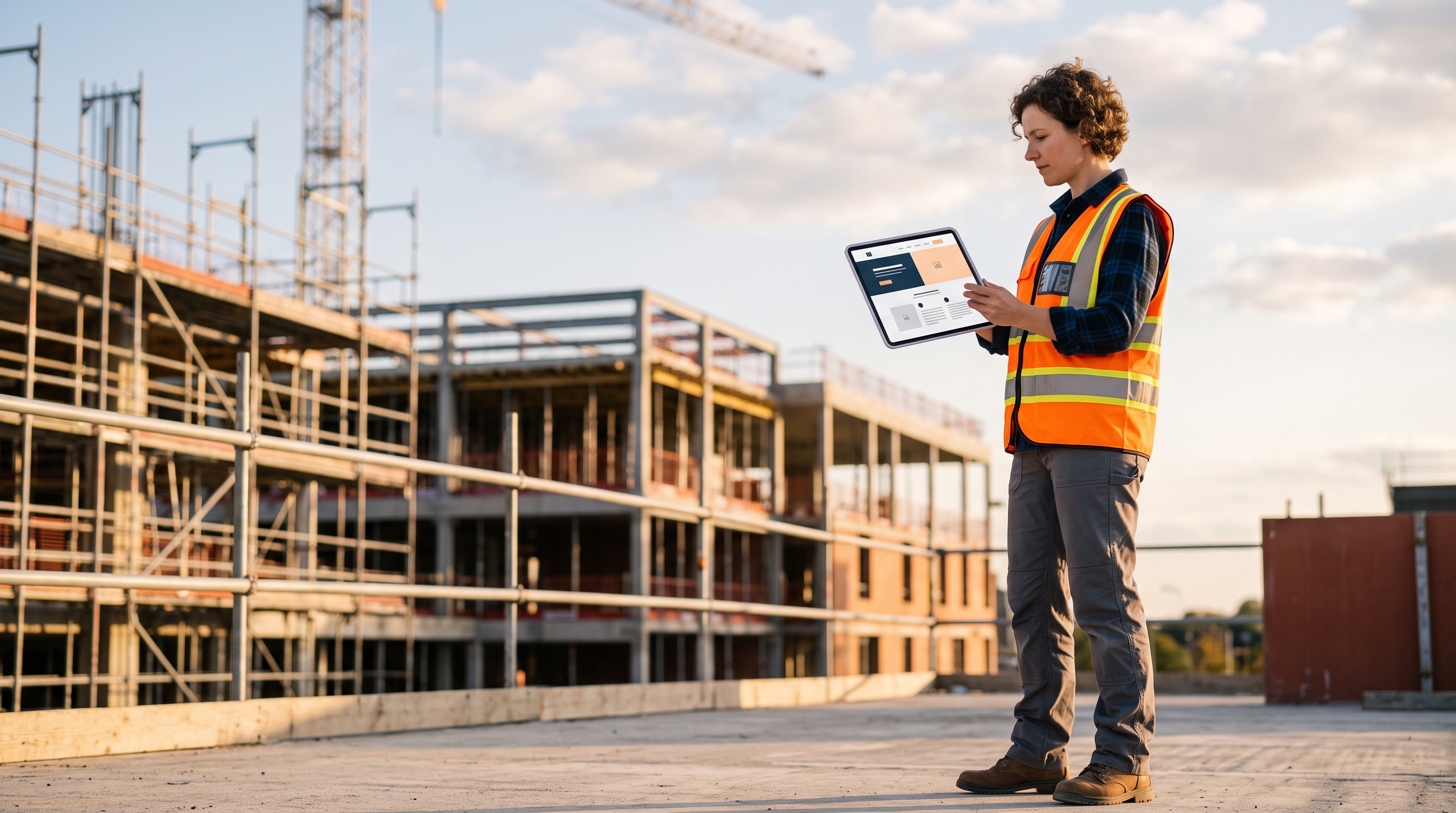
A professional construction company website should do more than show your logo, services and a few project photographs. It should quickly explain what your business does, demonstrate the quality of your work, build trust and make it easy for potential clients to get in touch.
Whether you are a builder, main contractor or specialist construction company, good construction website design combines professional presentation with clear information, strong project content and a structure that can be found through Google.
In this guide, we explain how to create a website for a construction company and the essential elements it should include.
1. Define what your construction website needs to achieve
Before thinking about colours, fonts or layouts, decide what you want the website to accomplish.
For most construction companies, the main objective is to generate enquiries from potential clients. That might mean homeowners looking for a builder, developers searching for a contractor or businesses looking for commercial construction services.
Your website should therefore be built around the customers and projects you want to attract.
Consider:
- What services do you offer?
- Where do you work?
- Who are your ideal customers?
- What type of projects do you want more of?
The answers should influence your website structure, content and calls to action.
2. Choose the right pages
A construction company website does not need hundreds of pages, but every important part of your business should have a clear place within the site.
A typical structure could include:
Home → About → Services → Projects → Accreditations → Areas Served → Contact
Individual services should have their own pages when they are important to the business. For example, a building company offering extensions, renovations and loft conversions could create separate pages for each service.
This gives visitors more information while also creating dedicated opportunities to target relevant searches.
Project pages are equally important. Rather than displaying all your work in one gallery, create detailed case studies for significant projects. Explain what the project involved, where it was completed and what your company delivered, alongside high-quality photography.
3. Create a homepage that communicates your business quickly
The homepage should immediately tell visitors what you do, where you operate and why they should consider your company.
Avoid vague headlines such as:
"Building a better future together."
Instead, be specific:
Commercial construction and refurbishment across Manchester
This immediately communicates the company's service and location.
Your homepage should then introduce your main services, showcase selected projects, provide trust signals such as testimonials or accreditations and give visitors an obvious way to make contact.
Good construction web design is not about putting as much information as possible on the homepage. It is about presenting the most important information in the right order.
4. Showcase your construction projects
Your completed work is one of the strongest forms of evidence you have.
Potential customers want to see what you have actually built, renovated or delivered before deciding whether to contact you.
A strong project section should therefore go beyond a simple photo gallery.
For each important project, explain:
- What type of project it was
- Where it was completed
- What work you carried out
- Any relevant challenges
- The completed result
For example, instead of simply showing ten photographs from a house renovation, create a page describing the renovation, the location, the scope of work and the outcome.
Project case studies can build credibility while also providing useful content for search engines.
5. Build trust with evidence
Construction projects can involve significant budgets, so visitors need reasons to trust your company.
Your construction company website should make relevant evidence easy to find. This can include testimonials, accreditations, certifications, previous projects, team information and details about your experience.
The most useful trust signals depend on your business.
A residential builder might focus heavily on customer reviews and completed projects, while a commercial contractor may need to demonstrate relevant project experience, accreditations, sectors served and technical capabilities.
The important point is to show evidence rather than rely entirely on claims.
"Quality workmanship" is easy for any company to say. A portfolio of completed projects provides something much more convincing.
6. Make the website mobile-friendly
A large proportion of your potential customers will visit your website from a mobile device.
Your construction website should therefore be designed for smaller screens rather than simply being a desktop website that has been scaled down.
Navigation should be straightforward, text should be easy to read and important actions such as calling the company or requesting a quote should be simple to access.
Large project photographs should also be properly optimised so that they do not unnecessarily slow down the website.
A professional website that is difficult to use on a phone can lose enquiries before a visitor ever reaches the contact page.
7. Design the website for SEO
SEO should be considered when the website is planned, not added as an afterthought.
The structure should make it clear to search engines what services you provide and where you operate.
For example, a construction company offering commercial refurbishment in Birmingham could have dedicated pages for its key services, supported by relevant project case studies and location information.
Each important page should focus on a clear subject rather than trying to rank for every possible construction-related keyword.
Use natural language that reflects how your customers search. Terms such as construction website design, construction web design, construction company website and website for construction company describe the website topic directly, while your service pages should target the actual construction services you provide.
The goal is not to repeat keywords. It is to create a website with a clear and logical relationship between your company, services, projects and locations.
8. Make it easy for visitors to enquire
A website can look excellent and still fail commercially if visitors cannot work out what to do next.
Every important page should provide a clear next step.
Depending on your business, this could be:
- Request a quote
- Discuss your project
- Call us
- Arrange a consultation
The CTA should be relevant to the page. Someone reading about a specific service should not have to return to the homepage to find out how to make an enquiry.
Keep contact forms simple and make your telephone number easy to find, particularly on mobile.
Conclusion: create a construction website that works for your business
Creating a successful construction company website is about more than choosing a professional design. The website needs to communicate your services clearly, demonstrate your experience, establish trust and turn visitors into enquiries.
Start with your customers and the projects you want to attract. Build clear service and project pages around those objectives, make the website easy to use on mobile and structure the content so that both visitors and search engines can understand what your company does.
With the right construction website design, your website becomes more than an online brochure. It becomes a practical sales and marketing channel for your construction business.
Looking for a professional website for your construction company? ConstructionWebDesign creates websites specifically for UK construction businesses, with design, SEO, project showcases and lead generation built around the needs of construction companies.
Want a website that brings in work like this?
Fixed price, live in seven days, built only for construction firms. Book a 30-minute call and we will tell you straight what we would do.