Handyman websites that fill the diary and cut the admin.
Websites for UK handyman services — a plain list of the jobs you take, rates published, booking with real time slots, and the insurance and DBS details customers look for.
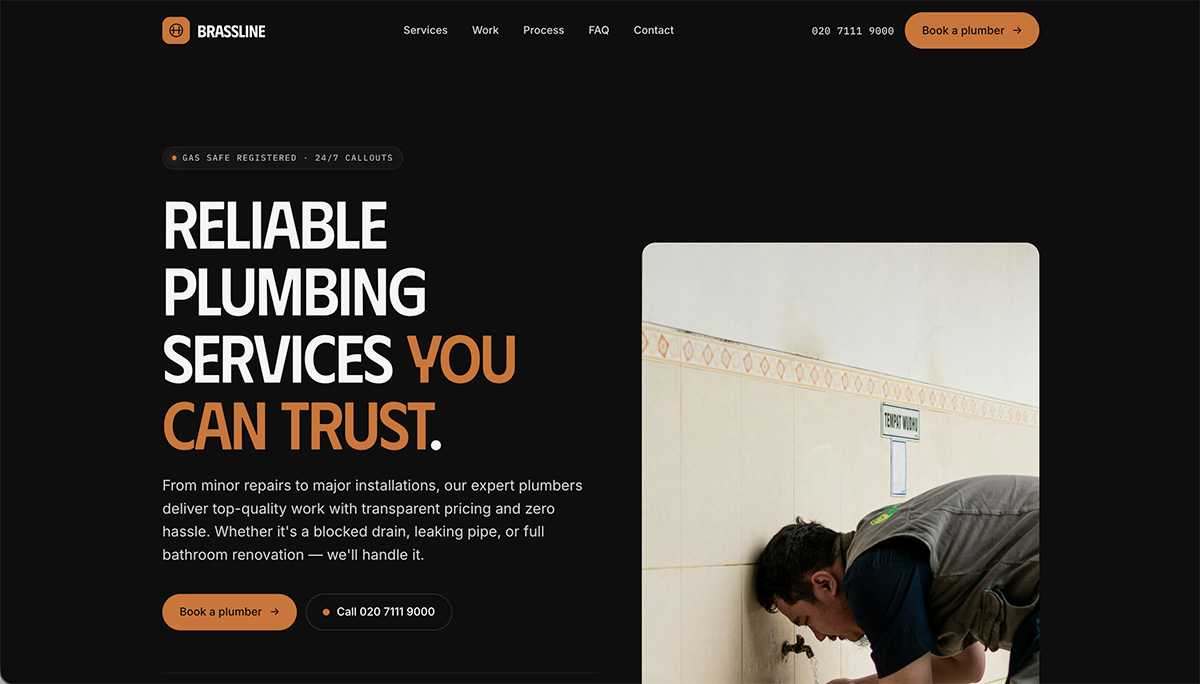
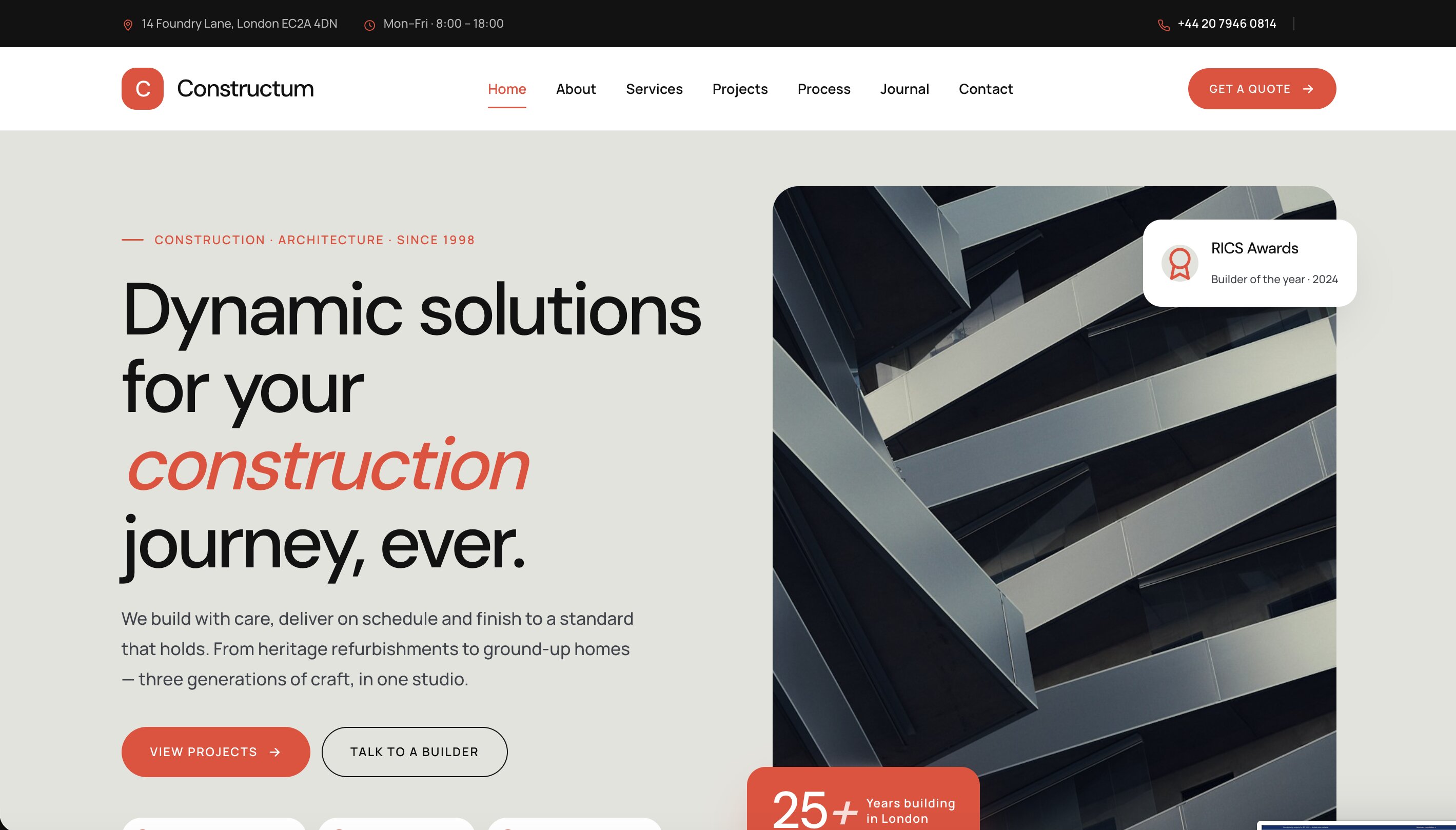
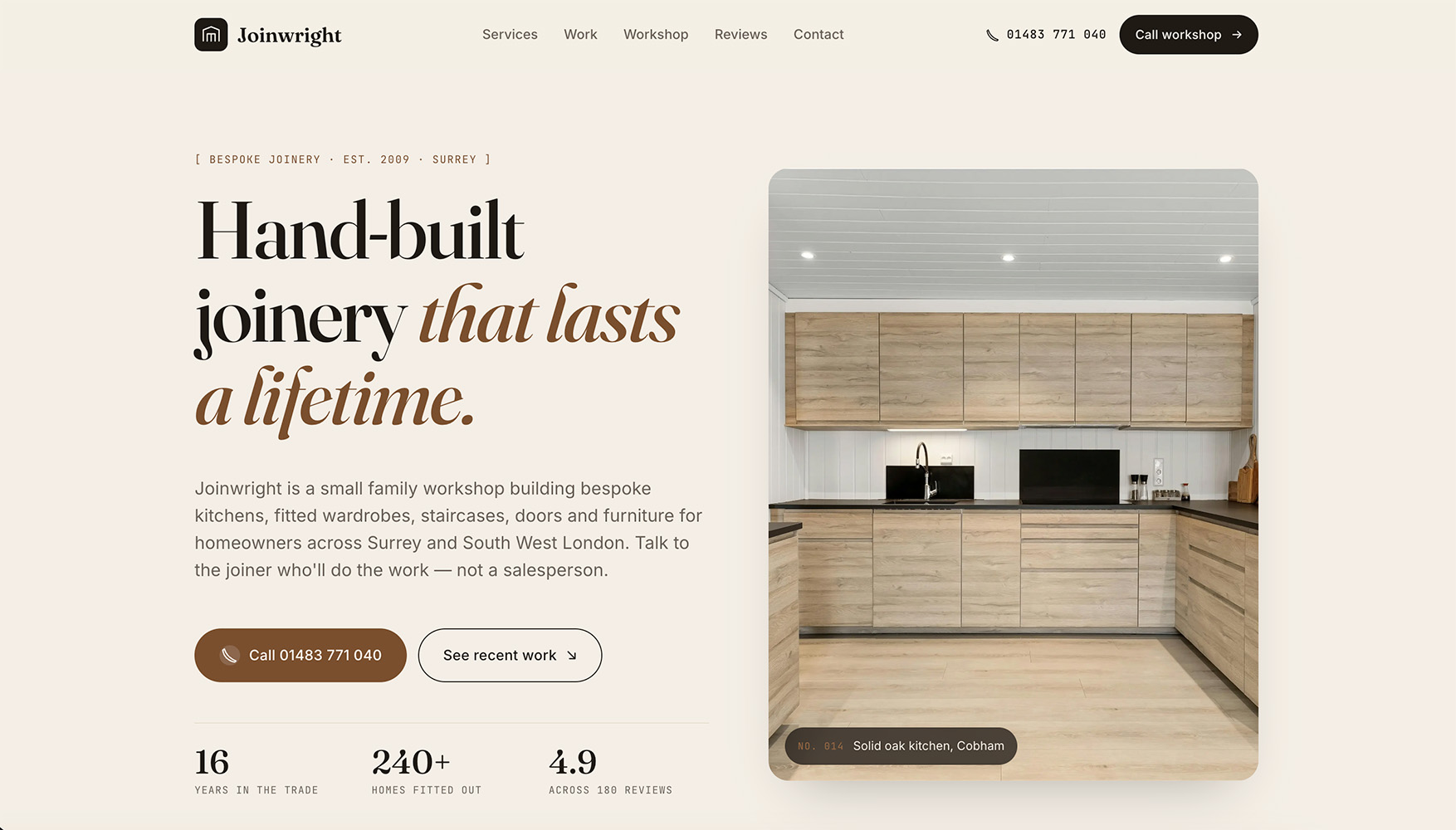
The closest builds in our library — family-run building, joinery and plumbing. Open any of them to see how a plain service list, published rates and a booking route are laid out.
A handyman lives on volume and repeat customers. The site's job is to answer do you do this, how much, and when can you come — before anyone picks up the phone, because most of the calls you don't want are the ones asking exactly that.
Say what you do — and what you don't.
Flat-pack, shelving, TV mounting, easing a sticking door, clearing gutters, fence panels, tap changes, curtain poles. Naming the jobs brings in the right ones, and a short list of jobs you don't take ends the calls that were never going to book.
Publish the rates.
Hourly, half-day and full-day rates, the minimum charge, the area you cover and how materials are handled. Customers who won't pay it never ring; the ones who will book without a haggle.
Let people book, not enquire.
Real slots — Tuesday morning, Thursday afternoon — with the job type and address captured. Booking beats an enquiry form for a handyman, because the work is small, frequent and rarely needs a quote first.
Be the one people trust in the house.
Public liability cover, a DBS check, a real photograph of you rather than a stock tradesman, and reviews from your own postcodes. A lot of handyman work is for older customers being careful about who they let in.
What's in the site
Built around how a handyman fills a week.
Every feature either brings in the right sort of job, removes a phone call, or gets a booking into the diary without a site visit.
01
The full job list, in plain words.
Every job you take, grouped by room and by outside work, written the way a customer would describe it — the bathroom door won't shut properly, not joinery adjustments. Each group is its own page and its own search term.
02
Rates and minimum charge, published.
Hourly, half-day and full-day, the minimum charge, travel area, how materials are handled and whether you take card. The most common question, answered before anyone has to ask it.
03
Online booking with real slots.
The customer picks a half-day window, describes the job, adds a photo and the postcode. It lands in your calendar confirmed, with a reminder the day before to cut no-shows.
04
What we don't do.
Gas work, notifiable electrical work, structural alterations, work at height beyond your insurance — whatever your line is. Saying it publicly reads as competence rather than weakness, and it keeps out the jobs that go wrong.
05
Insurance, DBS and a real photo.
Public liability cover with the figure on it, a DBS check where you work for older or vulnerable customers, and a photograph of the person who actually turns up. Nothing sells a handyman faster than looking like someone you would let in.
06
Repeat-customer routes.
A book-me-again link for regulars, saved job history, and seasonal prompts — gutters in autumn, fence checks after winter. Repeat work is the cheapest work a handyman can get.
FAQ
Handyman website FAQs.
The questions handymans ask before they hit the “get a price” button.
How much does a handyman website cost in the UK?
A handyman website from ConstructionWebDesign starts at £1,000, fixed price, including the booking flow. That is against £80–£250/month on a generic platform you never own. Hosting and SSL are included for the first year.
How long does it take to build a handyman website?
Seven working days from kickoff to live. ConstructionWebDesign starts from a proven trade layout, loads your job list, rates, booking slots, insurance details and reviews, and ships it.
What should a handyman website include?
A plain list of the jobs you take, a short list of the ones you don't, published hourly and half-day rates, the area you cover, online booking with real time slots, public liability cover, DBS where relevant, and reviews from your own postcodes.
Should a handyman publish prices?
Yes. Handyman work is small and frequent, so the customer decides in minutes rather than weeks. Publishing an hourly and half-day rate with a minimum charge removes the biggest reason people don't ring, and filters out the ones who were only ever going to haggle.
Is a website worth it when I get work from Facebook and word of mouth?
Yes, because both end in someone searching your name. A Facebook page buries your rates, job list and coverage area under whatever you posted last, and it cannot rank properly on Google. The site is the part you own and the part that gets found.
Can customers book without ringing me?
Yes, and most will if you let them. The booking form takes a half-day slot, the job description, a photo and the postcode, then drops straight into your calendar. It is the single biggest admin saving on a handyman site.
What jobs should I say I don't do?
Anything notifiable or specialist: gas work without Gas Safe registration, notifiable electrical work under Part P, structural alterations, asbestos, and work at height beyond what you are insured for. Publishing the line protects your insurance position and stops the wrong calls.
Do you do SEO for handyman services?
Yes. Every handyman site ConstructionWebDesign builds ships with local SEO baked in: schema markup, Google Business Profile setup, postcode keywords and a page per job group, so both a near-me search and a flat-pack assembly search land somewhere relevant.
More categories
Built for other trades too.
Same approach, tuned to each trade — pick yours and see a landing page built just for it.