Turn the recommendation into a booking.
Every referral gets Googled before anyone rings. If your name brings up a Facebook page and nothing else, the job goes to whoever has a proper site. A page per job type closes that gap.
Websites for UK tradesmen — a page for every job you take, the postcodes you cover, your qualifications and insurance up front, and a one-tap number.
Templates from across the trades — brickwork, plumbing, electrical, joinery and roofing. Open any of them to see the layout we would adapt to the jobs you take on.
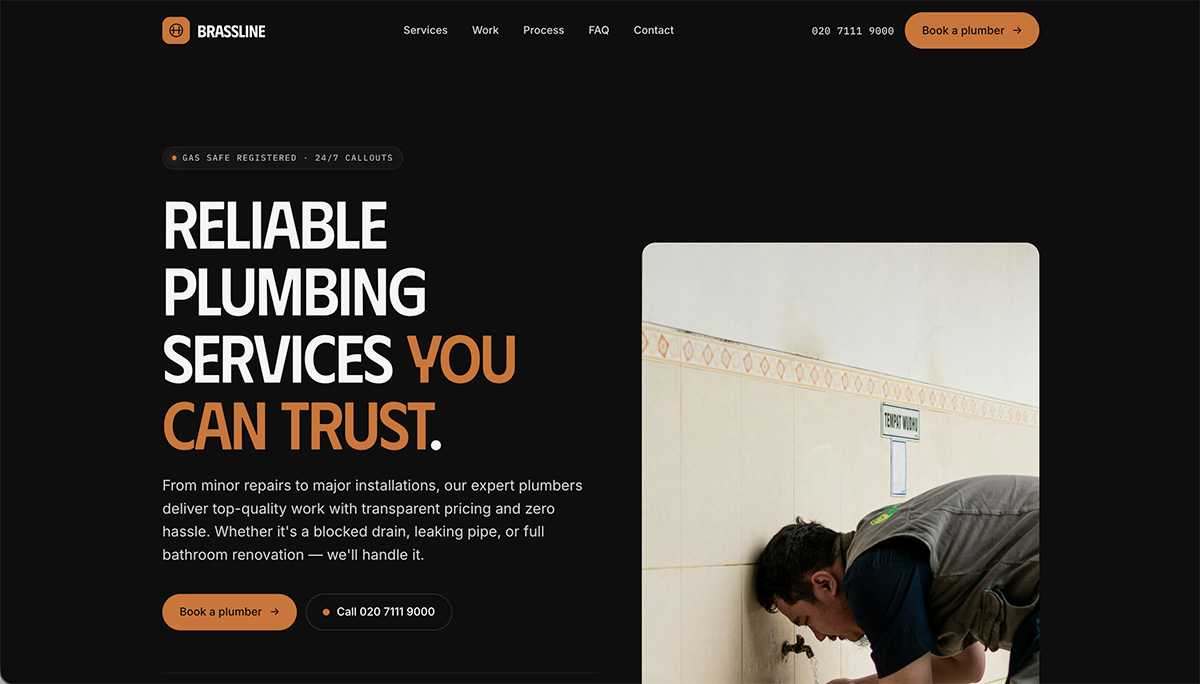
For plumbing and heating firms — emergencies, bathrooms, boilers.
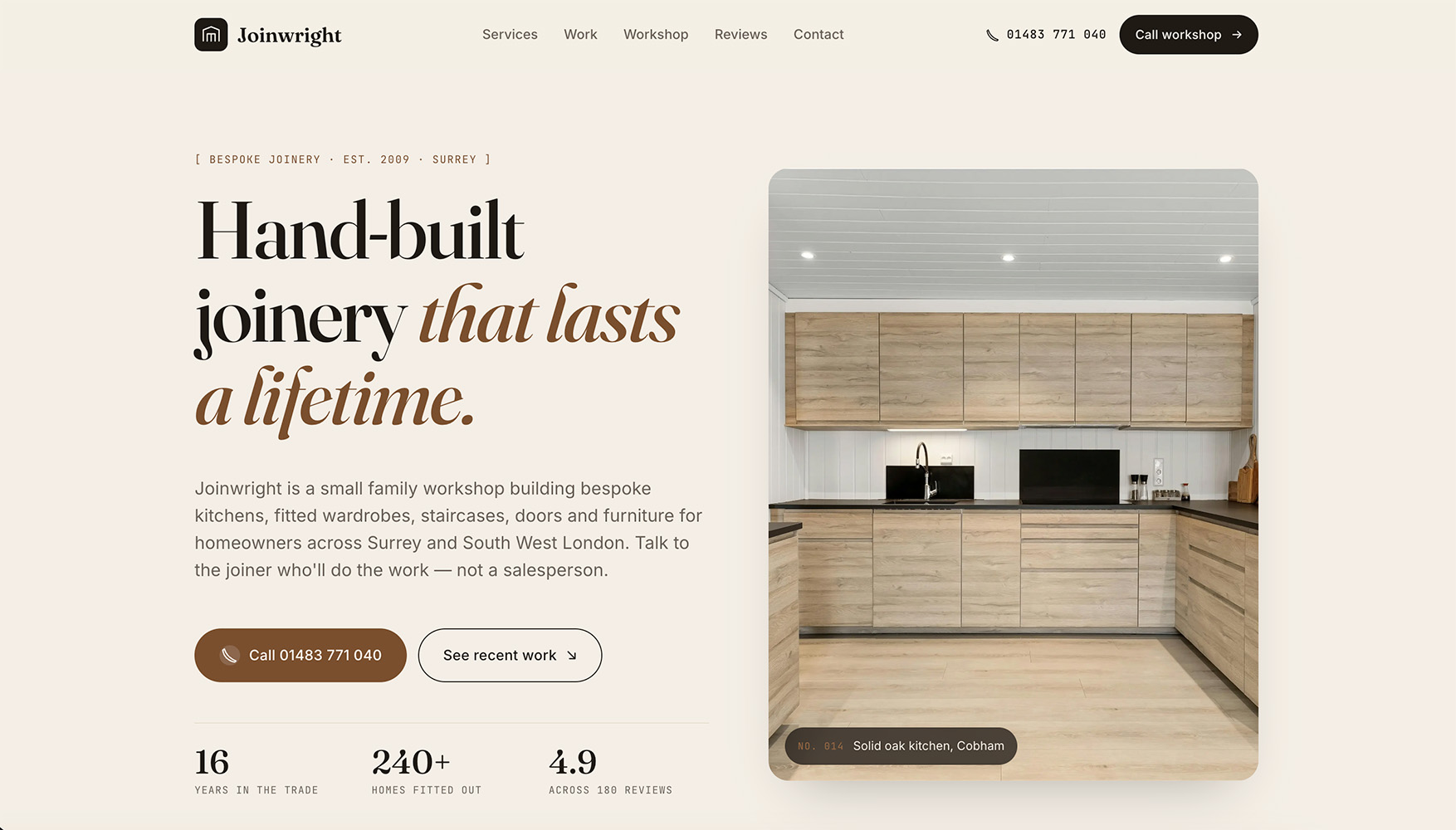
For bespoke carpenters & joiners — kitchens, wardrobes, staircases, doors.
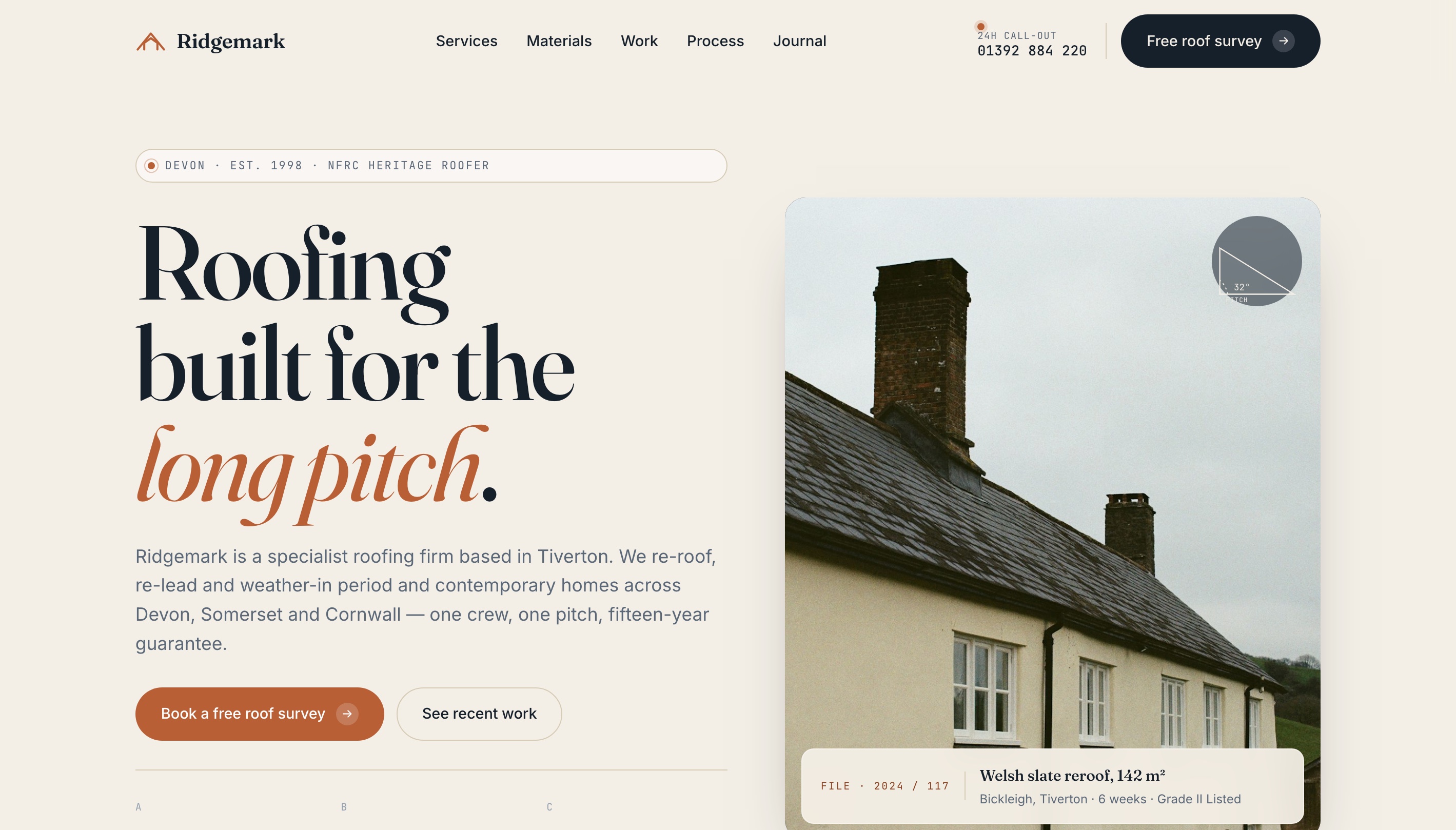
For roofing contractors — slate, tile, lead, copper, zinc and heritage.
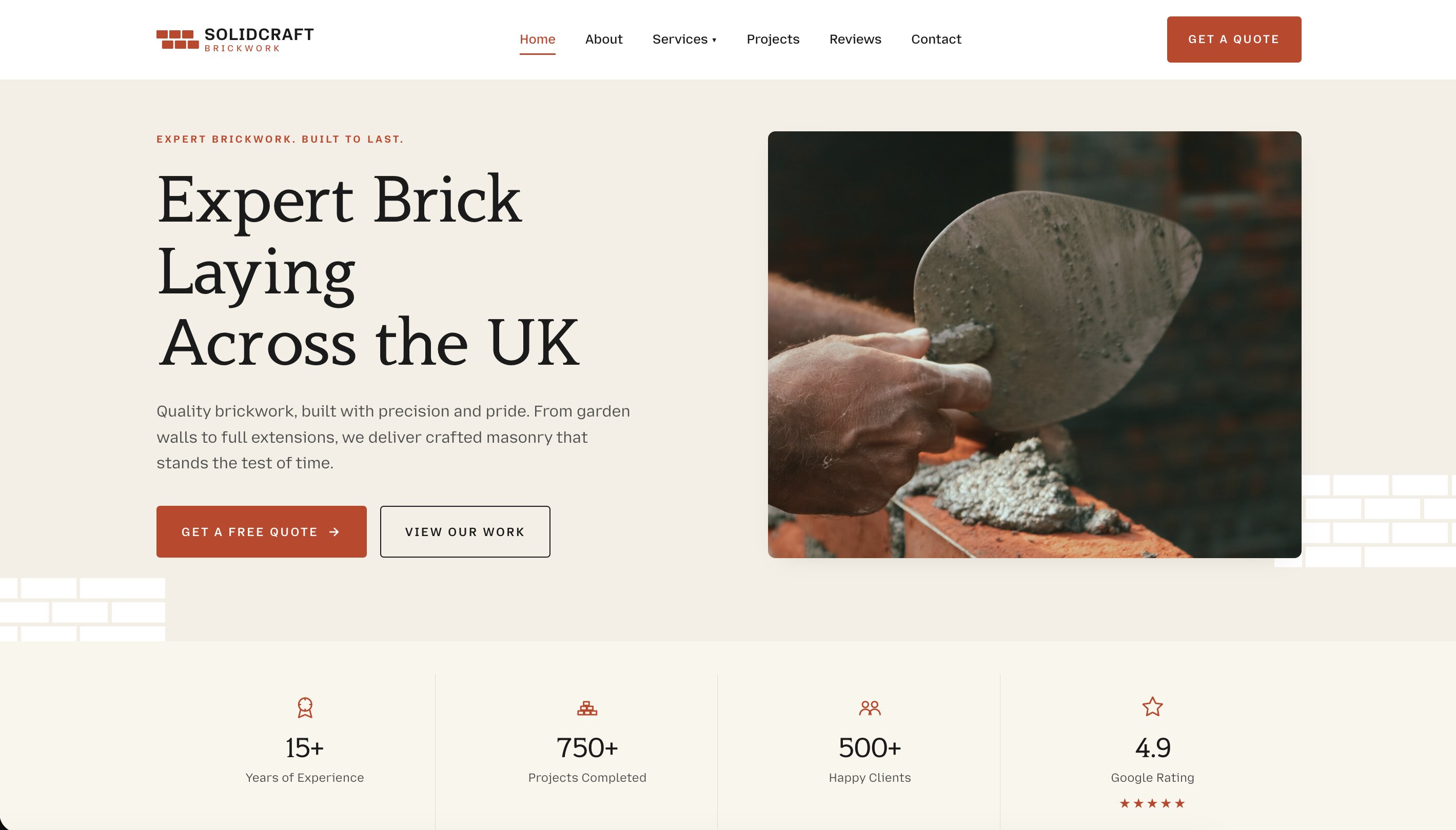
For bricklayers, masons and brick extension specialists.
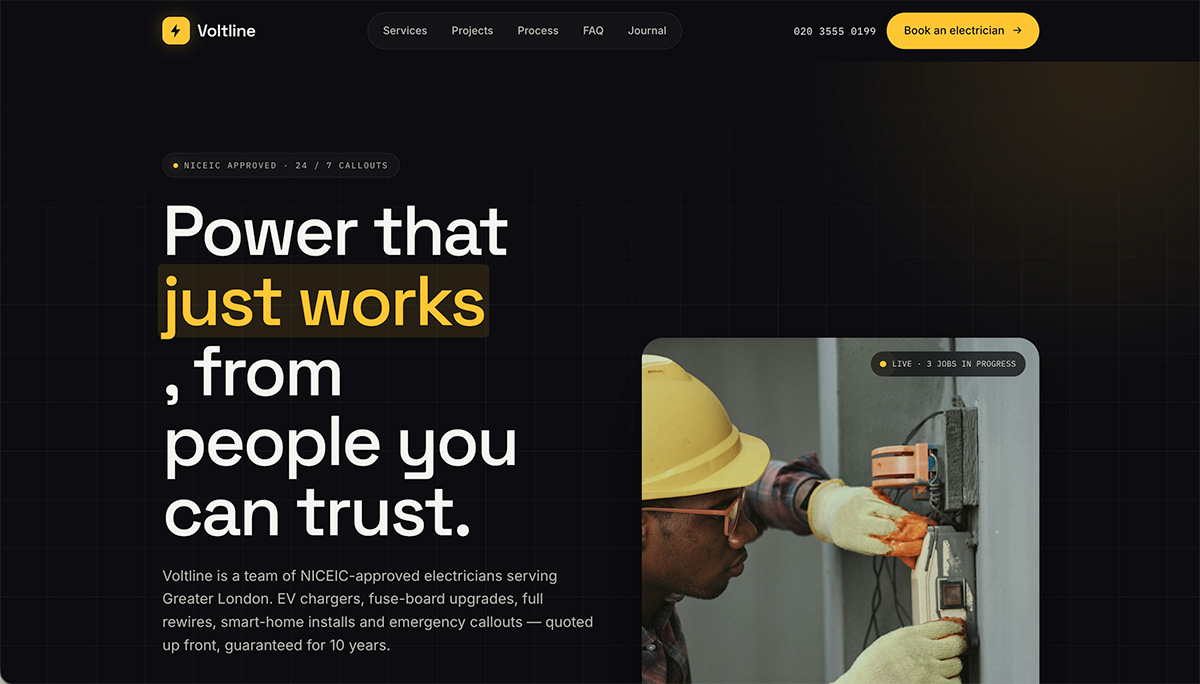
For NICEIC electricians, EV installers and smart-home specialists.
Most tradesmen get work by word of mouth and then lose the next job because there is nothing to look at when the customer searches the name. The site is what happens between the recommendation and the phone call.
Every referral gets Googled before anyone rings. If your name brings up a Facebook page and nothing else, the job goes to whoever has a proper site. A page per job type closes that gap.
List the work you want more of and leave off what you don't. Naming the jobs, the job sizes and the rates filters out the time-wasters before they reach your phone.
Postcode-targeted SEO, Google Business Profile setup and a page per town you cover, so you show up in the villages and suburbs you actually drive to rather than the whole county.
Public liability cover, City & Guilds or NVQ, CSCS card, trade-body membership — in the header with numbers that check out. It is what a customer wants settled before letting you through the door.
Every feature earns its place by bringing in calls, filtering out the jobs you don't want, or shortening the path from visit to enquiry.
Not one merged services list. Each job type gets its own page with photos, a typical price band and how long it takes, so each one ranks separately and answers the question before you get rung.
Trade traffic is mobile and impatient. Your number sits at the top of the first screen and follows the scroll, so a customer can ring you from a bus stop without hunting for a contact page.
A simple upload area so you can add finished-job photos from the van at the end of the week. Real work from your own postcodes beats stock photography for both trust and rankings.
One page per town or postcode you genuinely work in, written properly rather than spun from a template. Keeps you clear of Google's doorway-page filters and gets you found outside your home town.
If you hold public liability cover, City & Guilds, NVQ, CSCS or trade-body membership, we put it where the eye starts, with numbers linked to the register. Nothing to show, nothing shown.
Captures postcode, job type, photos and rough timing in under 30 seconds, so an enquiry lands with enough detail to price it — or turn it down — without a site visit.
The questions tradesmans ask before they hit the “get a price” button.
A tradesman website from ConstructionWebDesign starts at £1,000, fixed price. UK trades typically pay £1,000–£3,000 for a built-for-trade site, against £80–£250/month on a generic builder. Hosting and SSL are included for the first year.
Seven working days from kickoff to live. ConstructionWebDesign starts from a proven trade template, drops in your job types, coverage areas, photos, insurance details and reviews, and ships it.
At minimum: a page per job type, the towns you cover, your public liability and qualification details, finished-job photos, real Google reviews, a one-tap number and a quote form that takes under 30 seconds. ConstructionWebDesign ships all of that by default.
Yes — even if all your work comes by word of mouth. A recommendation gets Googled before anyone rings, and a name with nothing behind it loses to one with finished jobs, insurance details and reviews on the page. ConstructionWebDesign builds trade-specific sites for exactly that moment.
They do different jobs. Directories rent you leads you share with other trades and charge every month; your own site sends the enquiry straight to you and keeps working when you stop paying. Most trades run both, with the site as the part they own.
Yes, and it should. Multi-trade is normal for UK tradesmen. Each trade gets its own page rather than one merged list, so a customer searching for that single job still lands somewhere relevant and each page ranks on its own.
Yes. Adding a finished-job photo, changing a price band or adding a covered area takes a couple of minutes on a phone. ConstructionWebDesign builds the editor for someone sitting in a van, not for a marketing department.
Yes. Every trade site ConstructionWebDesign builds ships with local SEO baked in: schema markup, Google Business Profile setup, postcode keywords, and a page per job type and per town you cover so each one ranks separately.
Same approach, tuned to each trade — pick yours and see a landing page built just for it.

Fixed price. Live in seven days. Built around the jobs you take, the areas you cover and the customers you want.